
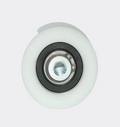
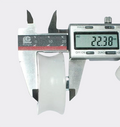
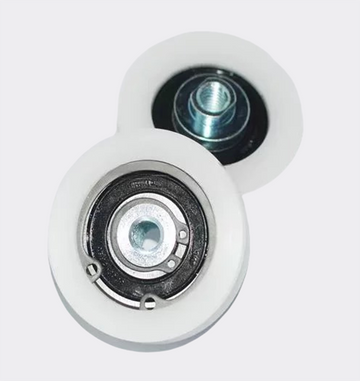
بكرات ECLT للأبواب الأوتوماتيكية من GEZE ECdrive
Key Specifications
-
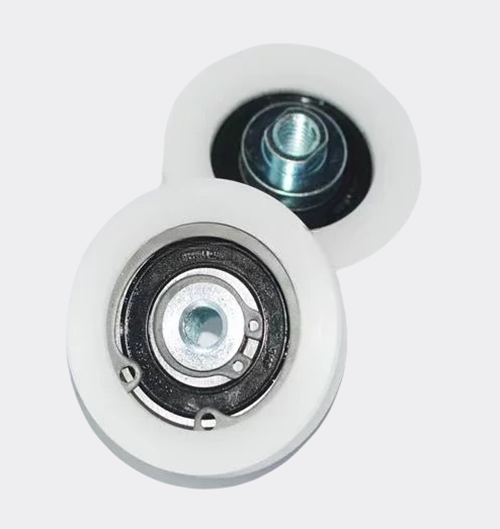
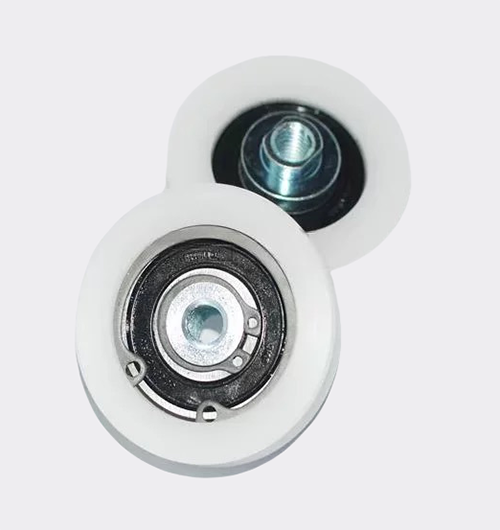
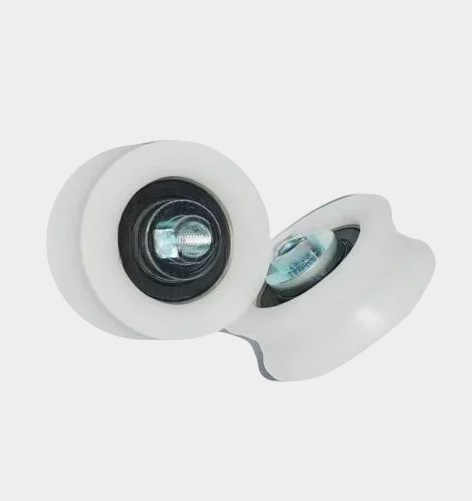
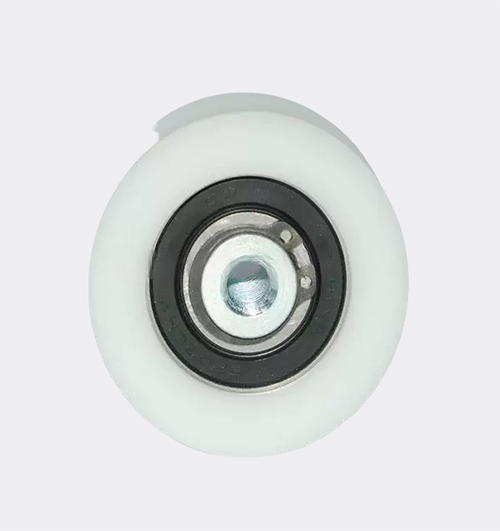
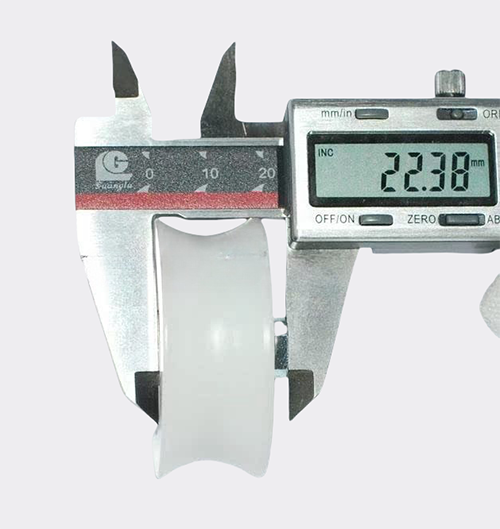
Product name: GEZE ECdrive Roller — professional roller for ECdrive carriage/trolley heads; also called ECDrive Roller, Roller suitable for Geze, Roller GEZE EC Drive, or Geze EC Drive Roller in trade catalogs .
-
System compatibility: GEZE ECdrive linear sliding door platforms (classic ECdrive and ECdrive LT); widely used on ECdrive T2 models that adopt the same double-roller carriage concept. Always verify profile and geometry against the installed carrier .
-
Typical cross-references: Roller-only part numbers frequently listed as 117380 (also catalogued as 160341); roller carriage assembly commonly listed as 117363; “roller with bearing suitable for Geze” often shown as 12013460 .
-
Construction: Low-noise polymer running tire bonded over a sealed deep-groove ball-bearing hub for quiet operation and reduced rail wear .
-
Platform context: ECdrive family features a slim header (approx. 100 mm cover height). The ECdrive T2 highlights a double roller carriage and, with GCprofile Therm, supports door leaves up to 140 kg depending on configuration .
-
Pack formats: Supplied per wheel for economical refurbishments, pairs for one moving leaf, or as complete roller carriage kits when axles/housings are worn.
-
Use cases: High-traffic commercial entrances in retail, healthcare, transit, hospitality and corporate campuses where acoustic comfort and uptime are priorities .
FAQ
Q1. Will this ECdrive Roller fit my GEZE ECdrive or ECdrive LT?
A. Yes—this is the standard roller suitable for Geze ECdrive platforms. For legacy LT variants, confirm by part number or geometry (roller OD/profile and bore) before ordering .
Q2. Is it also correct for ECdrive T2?
A. Many ECdrive T2 operators use the same double roller carriage architecture. Match the wheel profile and size to your installed T2 carriage to confirm fit .
Q3. How many rollers should I order?
A. One carriage head typically uses two rollers. A single moving leaf uses one carriage (two rollers); a bi-parting entrance uses two carriages (four rollers). Replace in pairs per leaf to maintain balanced rolling resistance .
Q4. When should I change rollers only vs. the whole carriage?
A. If the carrier body and axle are sound, rollers-only renewals are fast and economical. If axle play, bent brackets, or cracked housings are present, choose a roller carriage kit (two complete trolleys) to restore geometry .
Q5. What field symptoms indicate worn rollers?
A. Rail chatter, flat-spot thumping, drift out of level, difficulty completing “learn” cycles despite correct belt tension, or increased closing forces typically point to tread or bearing wear rather than controller faults .
Q6. Do new rollers change the door’s certified weight rating?
A. No. Ratings are determined by the operator platform and configuration. Fresh, geometry-correct rollers help the door run within force targets and maintain consistent stop positions under EN 16005 / DIN 18650 commissioning .
Q7. Any tips to reduce callbacks after replacement?
A. Replace both rollers per leaf, re-level the panel, reset end buffers, inspect return pulley bearings and the drive belt, and run the controller’s teach/learn routine so parameters reflect the new friction profile .
Q8. What are the most common cross-reference codes?
A. Technicians frequently reference 117380 / 160341 for roller-only, 117363 for roller carriage (complete trolley), and 12013460 for “roller with bearing suitable for Geze.” Use these as verification aids alongside photographs of your installed carrier .
Product Description
Bring your automatic entrance back to factory-smooth glide with the GEZE ECdrive Roller, the precision running interface inside every ECdrive carriage head. In daily operation, these wheels suspend the leaf from the header, translate belt motion into linear travel, and keep reveals aligned—quietly and with low friction. When rollers wear flat or bearings dry out, you see telltales: door chatter in quiet lobbies, inconsistent stop positions, and controllers that struggle to finish learn cycles. Replacing rollers restores the friction profile the operator expects so the door starts cleanly, tracks straight, and stops exactly where presence sensors anticipate .
Must know before buying
1) Fitment confidence across ECdrive generations
Record photos of your header label and the installed carriage. If your system reads ECdrive or ECdrive LT, the ECDrive Roller is the standard renewal part. For ECdrive T2, confirm the wheel profile; T2’s hallmark is a double roller carriage designed to support higher leaf masses—up to 140 kg with GCprofile Therm—while preserving the ECdrive’s slim aesthetic . This visual and code-based verification prevents the “almost fits” that cause noise and premature wear.
2) Materials and bearing design that survive real buildings
Each Geze EC Drive Roller couples a sealed deep-groove bearing with an engineered polymer running tire. Seals retain lubricant and guard against dust from renovations; polymer treads damp high-frequency vibration users perceive as “noisy doors” while protecting the aluminum rail from scuffing. The result is demonstrably lower acoustic signature in healthcare and hospitality settings and extended track life in high-cycle retail applications .
3) When a wheel fixes the problem—and when it doesn’t
Wheels address rolling friction and roundness. If your header shows axle ovalization, cracked carrier cheeks, or uneven wheel spacing, a roller carriage swap (two complete trolleys) is the right fix. Stock both options—roller-only (117380/160341) for rapid renewals and carriage (117363) for geometry issues—so your technician can solve the problem in one visit .
4) How roller condition ties into safety compliance
Force measurements during commissioning depend on running friction and consistent stop positions. New rollers help your installation stay within the force limits expected under EN 16005 / DIN 18650 when combined with compliant sensors and correct teach-in, protecting users and minimizing liability .
5) Lifecycle economics you can defend
A pair of rollers restores operating quality on a single leaf at a fraction of the cost and downtime of a header swap. Proactively refreshing rollers reduces belt glazing and rail wear, which in turn extends service intervals on more expensive components. For estate managers, standardizing four rollers per bi-parting entrance as a planned maintenance item keeps inventories lean and improves first-time-fix rates across sites .
Field-tested workflow
-
Identify & document. Photograph the carriage and header label (ECdrive / ECdrive LT / ECdrive T2). Cross-reference with 117380/160341 (roller) or 117363 (carriage); 12013460 is a common stock descriptor for “roller with bearing suitable for Geze” .
-
Replace in pairs. Refresh both rollers per leaf to keep rolling resistance symmetrical. Check return pulley bearings and belt condition while the header is open .
-
Re-level & set buffers. Ensure reveals and threshold clearances are correct; adjust end buffers to eliminate impact.
-
Teach-in. Run the controller’s learn routine so acceleration, speed, force, and stop positions match the new friction profile .
-
Functional proof. Validate Automatic, Partial/Half-Open, Exit-Only, and Permanent-Open modes; verify presence/safety fields according to local code and site policy .
What you receive & common options
-
Roller-only (single unit) for targeted renewals;
-
Pair of rollers for one moving leaf;
-
Complete roller carriage kit for a full running-gear refresh;
-
Optional add-ons often ordered together: return pulley, drive belt per metre, and end buffers.